Unlocking Tenant Data for Better GRESB Scores
Learn how to simplify tenant utilities data collection for GRESB 2026 with smart tools, automation, and better engagement strategies.


Formerly known as the 'Global Real Estate Sustainability Benchmark', the organisation now simply called GRESB is a trusted partner to financial markets across real assets and climate-critical industries.
GRESB delivers assessment-based solutions, actionable insights, and granular asset-level data to drive informed investment decisions and support the transition to a sustainable, net-zero economy.
In 2025, 1,002 fund managers (including 84 new managers joining for the first time) submitted 2,382 assessments, including 239 entities participating in the inaugural Residential Component.
Submissions for 2026 GRESB Assessments are now open
The deadline for submissions is 1st July.
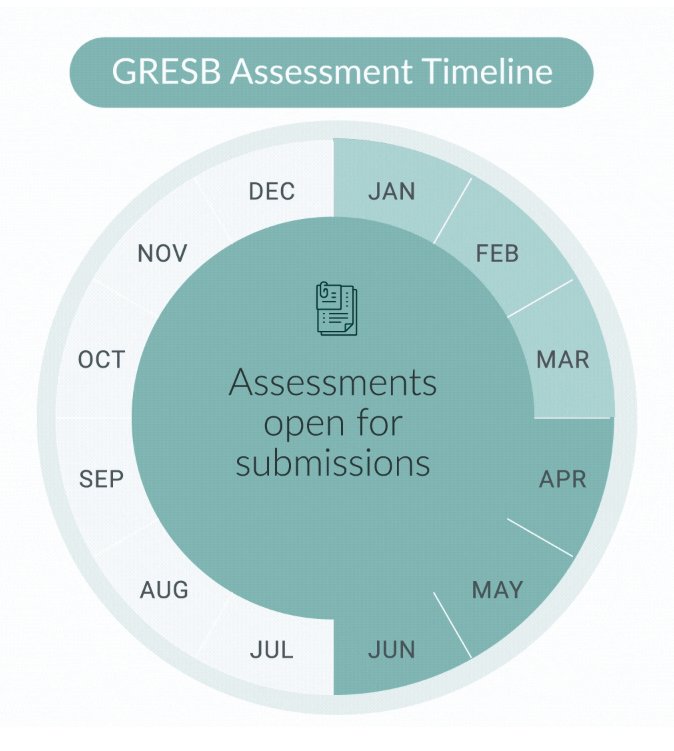
GRESB has assessments covering both real estate & infrastructure
The Assessments are guided by what investors and the industry consider to be material issues in the sustainability performance of real asset investments, and are aligned with international reporting frameworks, as well as region and country specific disclosure guidelines.
Each year, reporting to the GRESB Assessments generates the following benchmarks for the industry:
- Real Estate Benchmark
- Real Estate Development Benchmark
- Infrastructure Fund Benchmark
- Infrastructure Asset Benchmark
Assessment participants receive comparative business intelligence on where they stand against their peers, a roadmap with the actions they can take to improve their performance, and a communication platform to engage with investors.
Investors use the data and GRESB’s analytical tools to monitor their investments, engage with their managers, and make decisions that lead to more resilient, efficient, and financially attractive portfolios.
A GRESB Rating is derived from an annual GRESB Assessment
The GRESB Assessment places significant emphasis on actual energy consumption at the asset level. And the Performance component, which includes metrics like energy consumption and greenhouse gas (GHG) emissions, directly impacts an asset’s GRESB Score. Data coverage of these operational performance metrics is specifically rewarded.
But a persistent hurdle encountered by many responsible for GRESB reporting, particularly those managing multi-tenant properties, is the often frustrating process of trying to gather tenant utilities data. Below we’ll explore some of the contributing factors, and potential solutions to the problem.
Common reasons why it can be difficult to obtain utilities data from tenants

The commercial real estate landscape, with its diverse lease structures like percentage, net, and gross leases, presents a minefield of complex and often extraordinarily taxing demands when it comes to ESG (Environmental, Social, and Governance) reporting and sustainable development. But with investors increasingly scrutinising ESG data quality, and regulations tightening, a lack of substantiable energy and carbon data from tenants can create a major blind spot for GRESB reporting.
Some of the most frequently encountered challenges include:
- Data security and control concerns: Tenants may be hesitant to share data due to concerns about data security, potential misuse of insights (like rent increases), or tracking of their business activities.
- Lack of tenant incentive: Tenants are primarily focused on running their businesses, and while they might appreciate energy cost savings, it may not be their top priority right now. Landlords need to be more understanding of this perspective.
- Administrative burden: For both landlords and tenants, the manual processes of collecting, sharing, and managing utility bills can be time-consuming and prone to human errors. This added ‘bureaucracy’ can further discourage participation.
- Complex lease agreements: Existing leases (in particular long term 10+ year leases) may not include provisions for mandatory data sharing, making it difficult for landlords to access this information without renegotiating or obtaining explicit consent. Even obtaining Letters of Authorisation (LOAs) can be a tenant-dependent and administratively painful process.
- Lack of standardisation: Different utility providers use varying data formats, making it harder to consolidate and analyse information even when it is obtained.
While the obstacles are real, they are not insurmountable
Advancements in smart technologies and sustainability software offer powerful solutions to transform the often-burdensome process of collecting tenant utilities data into a streamlined workflow that aligns tenant and landlord interests.
Here's how a combination of hardware, software, and humanware (UX and UI – both of which are crucial to user engagement and productivity), can be used to achieve your objectives:
1. Hardware: Installing sub-metering
Utility sub-metering provides granular energy and water consumption tracking in real-time. While initial investment is required for the installation of these IoT-enabled devices, there are many additional benefits.
As neutral intermediates, sub-metering providers increase the visibility into consumption patterns for both owners and occupiers. Tenants can unlock opportunities for improved energy efficiency, reduced resource consumption, and lower operating costs. Landlords gain the critical data they need to optimise the sustainability rankings of their assets, whilst simultaneously respecting the autonomy of their tenants.
2. Software: Integrating sub-metering with sustainability software
Integration of IoT sensors and sub-metering systems with a cloud-based energy management and carbon/ESG reporting platform via an API automates the collection, validation, and storage of all energy and carbon data in one central, searchable, and secure location, providing live views and analyses of resource consumption at the asset level.
The insights provided by this single source of truth allow users to identify dependencies, find opportunities for optimisation, and establish robust benchmarking. The audit trail and clear linkages to primary data sources within the system also ensure that ESG reporting meets third-party validation standards.
3. Humanware: Ensuring end-to-end data visibility
Ensuring end-to-end data visibility in a user-friendly portal with easy-to-understand dashboards helps establish transparent data practices, enabling landlords to provide accurate information to tenants regarding their data usage, and respond to queries or requests related to this data. Tenants are more likely to work with a landlord when they feel their data provides value and is protected.
Nurturing an open, collaborative environment through a consistent interface promotes a culture of shared responsibility, which gives both parties impetus to drive continuous improvement in energy management practices within their own sphere of influence. When synergy occurs, sustainability outcomes for both landlords and tenants can be significantly enhanced.
Benefits of investing in sustainability software
Fit-for-purpose energy management and carbon/ESG reporting software has become a critical investment rather than a “nice to have” for organisations with large and complex portfolios. The return on investment (ROI) extends well beyond environmental performance, delivering measurable financial, operational, regulatory, risk, and reputational benefits across the entire organisation.
An all-in-one platform, like EnergyElephant, allows you to:
- Reduce energy consumption and costs: Identify inefficiencies, optimise energy use, and implement targeted energy-saving measures that lower operating expenses and environmental impact.
- Achieve sustainability and decarbonisation goals: Accurately measure and reduce carbon emissions across Scope 1, Scope 2, and Scope 3, supporting internal sustainability initiatives and long-term climate targets.
- Improve operational efficiency: Automate data collection, utility bill processing, reporting, and compliance workflows, reducing manual effort, errors, and reliance on spreadsheets.
- Enhance data-driven decision-making: Gain reliable, actionable insights into energy performance, asset efficiency, and emissions trends to support informed planning and investment decisions.
- Ensure both regulatory and voluntary compliance with audit readiness: Meet evolving local and global reporting requirements with confidence, avoiding missed deadlines, non-compliance risks, and potential penalties.
- Mitigate ESG-related risk: Proactively identify operational, environmental, and reputational risks linked to energy use and emissions before they escalate.
- Improve access to capital and financing: Strengthen ESG disclosures to meet investor expectations and unlock green financing, sustainability-linked loans, or preferential funding terms.
- Build stakeholder trust and transparency: Demonstrate credible progress on sustainability commitments to investors, customers, regulators, and employees through consistent, verifiable data.
- Strengthen brand value and competitive positioning: Position the organisation as a responsible, forward-thinking leader in sustainability, supporting brand reputation, customer loyalty, and talent attraction/retention.
How EnergyElephant's platform works
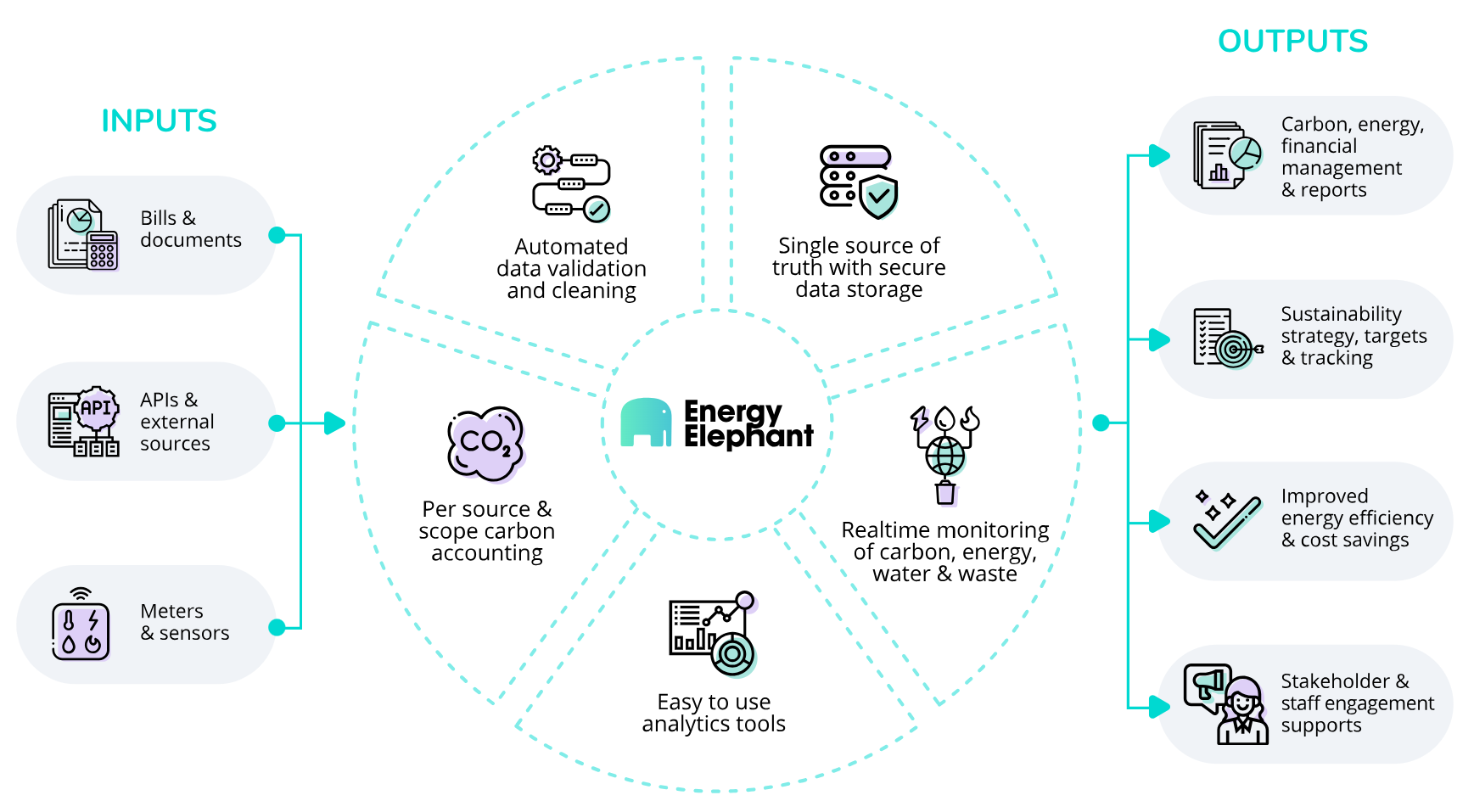
The EnergyElephant platform offers:
- Seamless integration: Our software supports access to real-time IoT sensors and sub-metering systems from multiple country/region data sources, to provide live views and analyses of your energy supply and consumption. This is done through integration of your meters and sensors with our system via our API or other connections.
- Granular level of detail: The system’s main dashboards act as a mission control for you to dive into your data quickly. You can drill down into any level of detail, gain insights on performance and savings, and identify any data gaps that need filling. Access to your data at any level of granularity enables better-informed decision-making.
- Real-time data: Access to real-time data at the asset level across all facilities helps you identify areas that need attention on any given site. Being able to take corrective action within minutes of an incident occurring leads to improved energy efficiency, reduced resource consumption, and lower operating costs.
- Tiered access: EnergyElephant allows you to add multiple users to your account and assign appropriate access levels based on need and responsibility, ensuring alignment with organisational roles and security requirements, to mitigate the risk of privilege escalation and unauthorised actions.
- Compliance with multiple frameworks: The platform’s easy-to-use, audit-ready reporting tools ensure your data is compliant with international protocols and frameworks, including: GRESB, ISO 50001, CSRD, CDP, B Corp, and more.
- A meter-reading mobile app: Along with our core platform, we created the simple-to-use EnergyElephant meter-reading mobile app which makes every meter a little bit smarter, even in places where smart meters may still be years away. The system allows any EnergyElephant user, in any location, to take a photo of any electricity, gas, or water meter on their smartphone, and upload it directly to their account. Because the app is tailored to our platform, you'll instantly be able to see how efficiently you are using energy, and identify opportunities for cost and energy savings to improve sustainability. It’s up to 90% faster than traditional meter-reading systems, and less travel by utility providers to physically read meters has environmental benefits too, as the amount of carbon emissions and air pollution from vehicles is dramatically reduced. Our app has been used in 80+ countries around the world to date.