From Energy Efficiency to Energy Resilience: Managing Grid Risk in a Volatile, Electric Future
As grids decarbonise and electrification accelerates, energy risk is structural. Learn how data-driven resilience reduces cost volatility, outages, and ESG exposure.

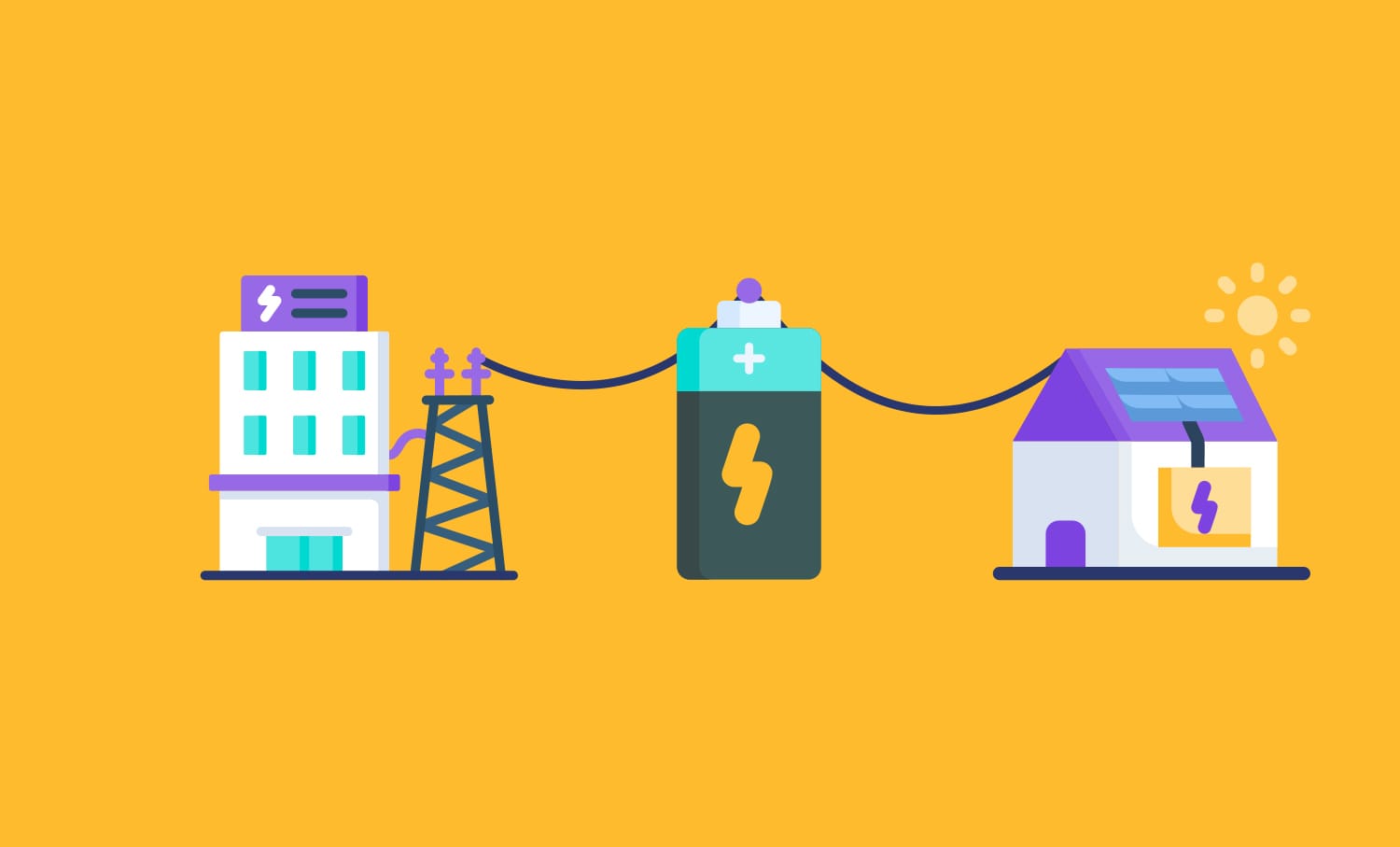
Energy resilience is no longer a niche technical concern or an abstract policy ambition. In 2026, it sits at the intersection of cost control, decarbonisation, and operational continuity – shaped by more volatile grids, faster electrification, and growing climate risks.
In this article, we unpack what energy resilience really means today, and why data has become its central enabler: making risk visible, enabling faster and more precise responses, and turning resilience from a vague aspiration into something that can be measured, managed, and acted on.
We explore what this shift means in practice for Finance, Sustainability, Operations, and Facilities teams; which demand-side flexibility tools genuinely move the needle; and how real organisations are already using data to turn volatility, outages, and grid stress into manageable – and sometimes valuable – events.
And finally, we offer a practical roadmap for turning energy resilience into an actionable, organisation-wide capability.
What energy resilience really means in 2026
Energy resilience is no longer shorthand for diesel generators in the car park or an onerous black‑start procedure. It is the ability to operate reliably, affordably, and sustainably under increasing pressure from a changing energy system.
Here’s what the current electricity landscape looks like:
- Renewables dominate new energy capacity additions and are already covering most demand growth in many regions, but their variability makes the grid more exposed to swings and constraints
- AI, data centres, and EVs are turbo‑charging electricity demand, while grid connections, capacity, and supply chains are becoming the new bottlenecks
- Governments and regulators are explicitly framing policy around building energy resilience – not just adding green megawatts, but ensuring those megawatts translate into secure, stable, 24/7 power
In this context, electrification without resilience is a false economy. You can hit short‑term carbon targets and still lock your organisation into higher long‑term costs, exposure to price spikes, and a greater risk of interruption if you ignore how your sites and buildings behave under system stress.
Modern energy resilience is dynamic; it’s about how intelligently your demand can respond, how flexibly you can use behind‑the‑meter assets, and how clearly you can see and manage your risk in real time.

Data has become the backbone of energy resilience
Energy systems, buildings, and industrial sites are now awash with data – real-time / smart meters, BMS (building management system) logs, process controls, weather feeds, and market prices. On its own, that flood of information simply reflects complexity. It is the analytics layer on top that turns raw data into insights and resilience.
Data makes risks visible
With the right software solution, organisations can see:
- When and where they hit peak demand and capacity limits as well as how often they occur
- How different processes, buildings, and assets behave under cold snaps, heatwaves, or supply constraints
- Which loads are genuinely critical and which can flex without impacting output, comfort and other essential services
Data enables precise, automated response
With this visibility, sites and buildings can:
- Automatically shift or shed pre‑identified loads during critical price or system events
- Use batteries and/or thermal storage to smooth their import profile, not just arbitrage day‑ahead prices
- Co-ordinate onsite generation, storage, and flexible loads as a virtual power plant (VPP) that responds to grid stress signals with or without manual interventions
Data turns resilience into a measurable KPI (key performance indicator)
You can quantify:
- How much peak demand you have avoided
- How often and how far you respond to grid events
- How much volatility you have removed from your energy costs
- How many tonnes of CO2 you have cut through time‑shifting and flexibility, not just procurement
In short, data is what allows energy resilience to move from aspiration to an operational discipline you can monitor, manage, take action on, and report.

What this means for professionals at the coalface
Energy resilience cuts across nearly every strategic and operational function. The implications differ by role.
1. Finance teams – from fixed overhead to managed risk
For CFOs and Finance teams under growing pressure to connect energy, carbon, and cost into a single, defensible risk story, resilience changes how energy spend should be evaluated in three practical ways:
- From average price to exposure to volatility: Two energy contracts with the same headline price can perform very differently when markets are stressed; assets that add flexibility – whether batteries or controllable load – reduce exposure to price spikes, imbalance charges, and capacity costs, which is increasingly where energy risk actually shows up
- From project-level ROI (return-on-investment) to portfolio risk reduction: Investments in batteries, controls, and energy analytics rarely justify themselves on energy savings alone; their real value lies in avoided downside – fewer disruption events, more predictable budgets, reduced longer term risks, and improved perceptions from lenders and insurers
- From compliance cost to value creation: The same assets used to manage risk can also earn revenue through flexibility markets and grid services; this turns resilience from a defensive cost into a capability with both cost-avoidance and income potential
The core question for Finance teams has shifted from ‘What is the payback period?’ to ‘How does energy resilience reduce our downside risk under realistic stress scenarios?’.
2. Sustainability teams – resilience as proof of serious climate action
Investors and regulators are increasingly looking beyond headline net‑zero pledges to the credibility of underlying plans. For ESG Managers and Sustainability teams, energy resilience is becoming a benchmark:
- Resilience underpins credible decarbonisation: Resilient sites that can keep operating in heatwaves, storms, and grid events are more likely to deliver against long‑term emissions trajectories, rather than relying on carbon offsets or risky procurement alone
- Flexibility turns ESG from narrative into evidence: Participation in flexibility markets, demand response, and on‑site resilience projects provide tangible, auditable Scope 2 reductions and adaptation measures that ESG teams can report, not just narrative commitments
- Frameworks are signalling faster than capital is flowing: Leading frameworks explicitly flag resilience as a marker of credible climate strategy, yet adaptation and resilience financing is still underfunded
For Sustainability teams, energy resilience is now one of the strongest pieces of evidence that a net‑zero plan is realistic and execution‑ready.
3. Operations teams – resilience as a design brief
Head of Estates and Operations teams are feeling the reality first, with estates now sitting directly on the fault line of a cleaner but more stressed electricity system. For them:
- Resilience is becoming a core design constraint: New and refurbished buildings must be able to flex load at peak times, integrate local generation and storage, and avoid locking in all‑electric but inflexible systems
- Electrification plans must be resilience‑aware: Electrifying heat and transport without flexibility simply moves risk from the gas grid onto the electricity grid; the estates brief has to specify not just kit, but controllability, data access, and flexibility pathways
- Campus‑scale flexibility is a major lever: Universities, hospitals, pharma plants, tech / science parks and local authorities are ideal candidates for aggregated flexibility, using a mix of heat pumps, storage, solar PV, and smart controls to support both their own resilience and the wider grid
Energy resilience is no longer implicit; Operations teams now need to ensure it is explicitly integrated into specifications, procurement, and commissioning.
4. Facilities teams – from efficiency projects to real‑time orchestration
Energy Managers and Facilities teams are now pivoting from one‑off optimisation projects to ongoing orchestration:
- Continuous monitoring and analytics: To spot where peak demand, imbalance risks, and comfort issues are emerging, and to tune control strategies accordingly
- Event‑driven operation: Where sites respond to grid stress signals or price events through pre‑approved playbooks; deciding which loads to flex, how far, and in what sequence
- Hybrid flexibility portfolios: Co-ordinating BESS, flexible loads, thermal storage, and onsite generation rather than relying on a single technology
Facilities teams need to blend engineering, data insight, and change leadership to ensure sites now respond effectively to both operational and grid-level challenges.

Demand‑side flexibility tools – what really moves the needle?
BESS (battery energy storage system) investments are often the headline act in resilience discussions, especially as costs have fallen sharply over the past few years and developers race to deploy GW‑scale capacity. But BESS is just one piece of the demand‑side flexibility puzzle. Each technology has a distinct resilience role.
BESS – controllable, multi‑service resilience
- Pros: Millisecond‑scale response for frequency and voltage support, precise peak shaving, no need to touch core processes, ability to stack revenue streams (arbitrage, ancillary services, backup)
- Cons: High capital expenditure (CapEx) and lifecycle costs; siting, safety and permitting constraints; energy losses across charge/discharge
BESS is strongest where you need tight control and highly bankable services – data centres, high‑tech manufacturing, urban sites with tough grid constraints, or portfolios looking to monetise flexibility at scale.
Flexible load control – cheapest resilience per kW
- Pros: Low CapEx, mostly software and controls; fast to roll out; directly addresses the grid’s core problem – demand at the wrong time
- Cons: Bound by process, comfort and safety limits; requires strong governance to avoid disrupting operations; not a backup source
This is often the fastest, highest‑ROI starting point: HVAC (heating, ventilation, and air conditioning), refrigeration, pumping, batch processes, and non‑critical loads can provide significant flexibility if managed with good data and clear rules.
Thermal storage – time‑shifting heat & cold
- Pros: Very cheap storage medium; ideal for buildings and cold stores; often invisible to occupants or production when designed well
- Cons: Time‑limited flexibility; dependent on plant and building fabric; less versatile than BESS for broader grid services
In a world of electrified heat and rising cooling loads, thermal flexibility is a major resilience asset, especially in campuses, hospitals, offices, and logistics.
Onsite generation – cutting baseline risk
Solar PV, CHP (combined heat and power), and wind – where feasible – reduce the amount of demand that needs to be flexed in the first place. When integrated with smart controls and, potentially, storage, they:
- Lower dependence on the grid at peak times
- Provide some autonomy during outages
- Enhance both carbon performance and energy resilience
The limitation is controllability – without storage or curtailment, many renewables are weather‑driven rather than dispatchable.
EV smart charging & V2G – emerging flexibility
As fleets electrify, depots and workplaces gain a latent storage resource:
- Smart charging EVs (electric vehicles) can shift large loads away from system peaks and local constraints
- V2G (vehicle‑to‑grid) can, in time, add genuine export capability, turning parked fleets into resilience assets
Constraints around user behaviour, duty cycles, and technology maturity mean this is still an emerging pillar, but the long‑term potential is significant.
The pattern across all of these? The strongest energy resilience strategies are portfolio‑based. They blend:
- BESS for ultra‑fast, precise response, and local constraints
- Flexible loads and thermal storage for bulk shifting and cost control
- Onsite generation and EV flexibility to cut baseline risk and enable additional services
Once again, the glue that holds the portfolio together is data.

Three data‑driven energy resilience stories in practice
To illustrate what this looks like on the ground, imagine three representative journeys:
1. Batteries & frequency – turning volatility into a non‑event
A system operator facing rising renewable penetration deploys grid‑scale BESS at key nodes. High‑resolution frequency and ROCOF (rate of change of frequency) data feed an optimisation engine that dispatches batteries within fractions of a second during disturbances. Over time:
- The depth and duration of frequency excursions fall, even as synchronous plants retire
- Potential under‑frequency load shedding events are prevented
- The cost of corrective redispatch drops
Here, the resilience is not ‘We have batteries’ but ‘We have batteries driven by analytics that exploit their speed in exactly the conditions where the grid is most fragile’.
2. Fault detection – using data to reduce outages
A DNO (distribution network operator) plagued by long rural outages rolls out smart line sensors and fully enables AMI (advanced metering infrastructure) data. Analytics detect fault signatures (over‑current, voltage sags, high‑impedance events) and triangulate likely locations. When faults occur:
- Control room staff receive suggested isolation and reconfiguration plans within minutes
- Crews are dispatched to specific spans rather than patrolling entire feeders
- Customers see outages measured in tens of minutes rather than hours
Resilience here is about smarter detection and response, not extra copper.
3. Demand‑side flexibility – a manufacturer becomes a grid asset
An industrial site with energy‑intensive processes partners with a flexibility provider. Detailed sub‑metering and process data are used to identify which loads can flex, how far, and under what conditions. A control platform links this to market and grid signals:
- During critical periods, non‑critical loads are shifted, thermal storage is used, and certain processes are timed to avoid peaks – all within operational constraints
- The plant earns revenue from flexibility markets while lowering its effective energy costs and avoiding curtailment notices
- From the system’s perspective, a once‑passive consumer is now a dependable resilience resource
In each case, the common ingredients are granular data, robust analytics, and clear operating envelopes agreed with the business.

How to turn energy resilience into an actionable roadmap
If you’re looking to move from concept to execution, a practical path can look something like this:
- Diagnose your exposure: Map where your organisation is most at risk – which sites drive peak costs, where outages hurt most, where grid constraints are tightest
- Build a data foundation: Ensure you have accurate, reliable metering, access to BMS and process data, and a platform that can bring these together with prices and – where possible – grid signals
- Identify flexible assets: Start with low‑regret opportunities – HVAC, refrigeration, pumping, storage, EV charging; then explore BESS and onsite generation where the economics are strongest
- Design operating playbooks: Define – per site and per asset – what can flex, how far, under which triggers, and who signs it off; this is where Facilities, Operations, and Finance must all be in the room
- Pilot, measure, iterate: Run controlled pilots, measure peak reduction, avoided costs and operational impact, and use the results to refine controls and build the case for scaling
- Integrate into strategy and reporting: Treat resilience KPIs – avoided peaks, response events, uptime, emissions impact – as part of your core performance dashboard, alongside cost and carbon